Mofongo & Camarones: The King of Puerto Rican Cuisine
If there is one thing Puerto Ricans truly master, it is the art of eating. We aren’t just talking about sustenance; we are talking about the soul-warming, traditional staples that define our culture. You will enjoy the best traditional foods from Abuelas kitchen in the common household to the humblest chinchorro (roadside stand) and finest white-tablecloth restaurants. Rice, beans, tostones de pana to mention a few, and the undisputed king of the menu—Mofongo.
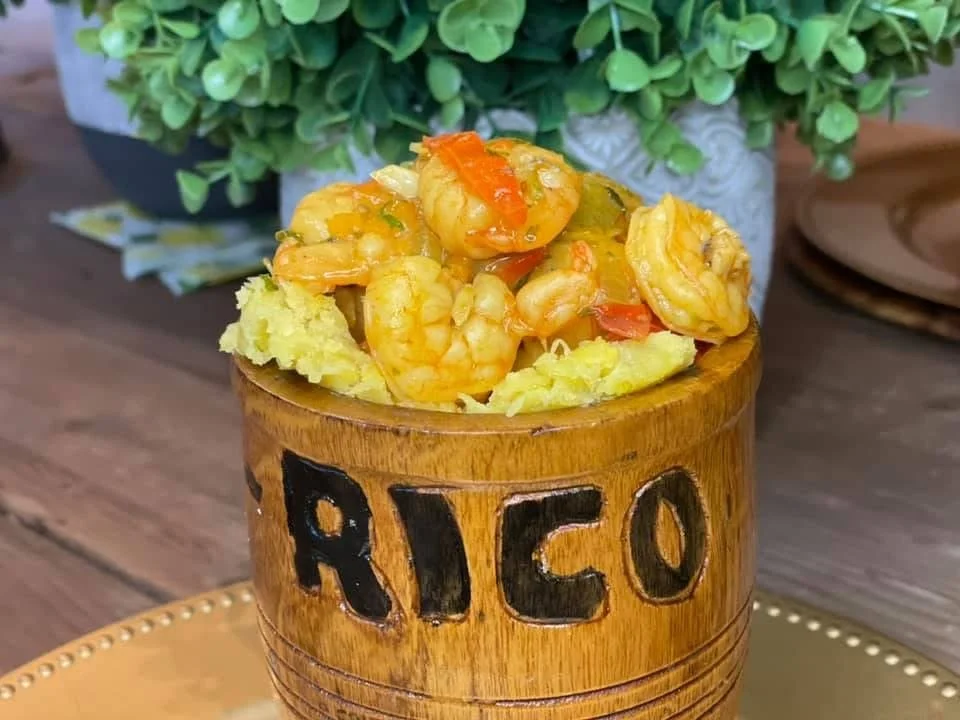
Mofongo relleno de camarones
What fascinates me most is how deeply Puerto Rican food has woven itself into every other cuisine on the island. Walk into a Chinese takeout restaurant in Puerto Rico and you will be handed the most perfectly fried tostones with garlic you have ever eaten in your life — that exact level of crunch, that hint of garlic, turning a pepper steak with fried rice into something transcendent. Walk into an Argentinian steakhouse and your perfectly cooked churrasco will arrive next to a mountain of arroz mamposteado (Mixed rice and beans). Once you combine those two on one fork, your steak game will never be the same.
But if you ask me the undisputed king of Puerto Rican cuisine is the Mofongo.
My "Skinny" Secret
For me, Mofongo is the masterpiece of our cuisine. It’s a complete star; you don’t need rice or a salad on the side. You just need a great protein—be it seafood, pork, or chicken—prepared in one of two ways: Al Ajillo (garlic-infused olive oil and parsley) or A la Criolla (a rich, tomato-based sauce with peppers and onions).
Growing up, Mofongo was a special occasion treat. Since my parents were from abroad, traditional Puerto Rican food wasn’t our daily home-cooked fare; it was the highlight of an evening out. When I moved to the mainland U.S., the nostalgia for those flavors started circling my mind.
I began experimenting with homemade mofongo, using incredible fresh seafood from Joe Patti’s Seafood in Pensacola. At first, I stuck to the script, frying the plantains. But as my husband started requesting it more often, I decided to try a "skinny" version. I swapped the frying for boiling and kept the secret to myself.
The result? No one could tell the difference! It’s lighter, easier for a weeknight, and just as satisfying. Today, I’m sharing that secret with you together with a ‘how to’ video. Whether you choose the traditional fried method or my boiled version, this dish is a gateway to the heart of the Caribbean.
The Full Recipe
El Mofongo
Yields 4-5 servings
Ingredients:
5 green plantains
1/2 cup extra virgin olive oil
2 garlic cloves, minced
1 tsp salt
Water for boiling (or neutral oil for frying if you prefer the original)
Directions:
Prep the Plantains: To peel, cut a slit through the skin from tip to tip without cutting the flesh. Use the back of a knife to help lift the skin, then pull it back with your thumbs. Pro-tip: Rub a little oil on your hands first to prevent the plantain sap from staining your skin!
Infuse the Oil: In a large mortar (pilón) or a small bowl, mix the olive oil, minced garlic, and salt. Let it sit to infuse while you cook the plantains.
Cook: Cut the plantains into 1-inch rounds.
For the "Skinny" version: Boil in salted water until fork-tender (about 15 minutes).
For the Traditional version: Fry in hot oil for about 5 minutes per side until golden but not browned.
The Smash: Drain the plantains and add them to your garlic-infused oil. Using a wooden mortar or a heavy spoon, roughly smash them. You want texture—don't puree them like mashed potatoes!
The Mold: Press the mixture into a small deep bowl or a mortar to create a 1/2-inch layer around the bottom and sides, creating a "well" in the center.
Camarones a la Criolla (Shrimp Caribbean stew)
Ingredients:
3 lbs shrimp (peeled and devined)
2 onions, sliced
2 bell peppers, sliced
2 carrots, sliced thin
4 garlic cloves, minced
8 green olives (manzanilla)
1 small can (8oz) tomato sauce
1 whole lager beer (Medalla is the island favorite!)
1 envelope Sazón with Achiote
1 bunch fresh cilantro, finely chopped
1/3 cup cooking oil
Salt and pepper to taste
Directions:
The Base: In a large skillet or pot, sauté the onions, peppers, garlic, and carrots in oil until the onions are translucent.
The Sauce: Stir in the cilantro, tomato sauce, beer, Sazón, and olives. Let the sauce simmer and reduce for 10 minutes to allow the flavors to marry. Season with salt and pepper and continue to simmer in low ‘til the carrots cook through.
The Shrimp: About 10 minutes before you are ready to serve, add the shrimp to the simmering sauce. Cook until they are pink and opaque.
The Finish: Generously ladle the shrimp and creole sauce into the center of your mofongo molds. Serve immediately while the "bread" of the plantain soaks up all that delicious broth.
A Quick Note on Nutrition
Plantains are a fantastic, nutrient-dense alternative to processed starches like pasta or white bread. By boiling them instead of deep-frying, you keep the heart-healthy fats of the olive oil front and center without the extra calories of the frying oil. Enjoy!
